 LOWLANDSPRESS
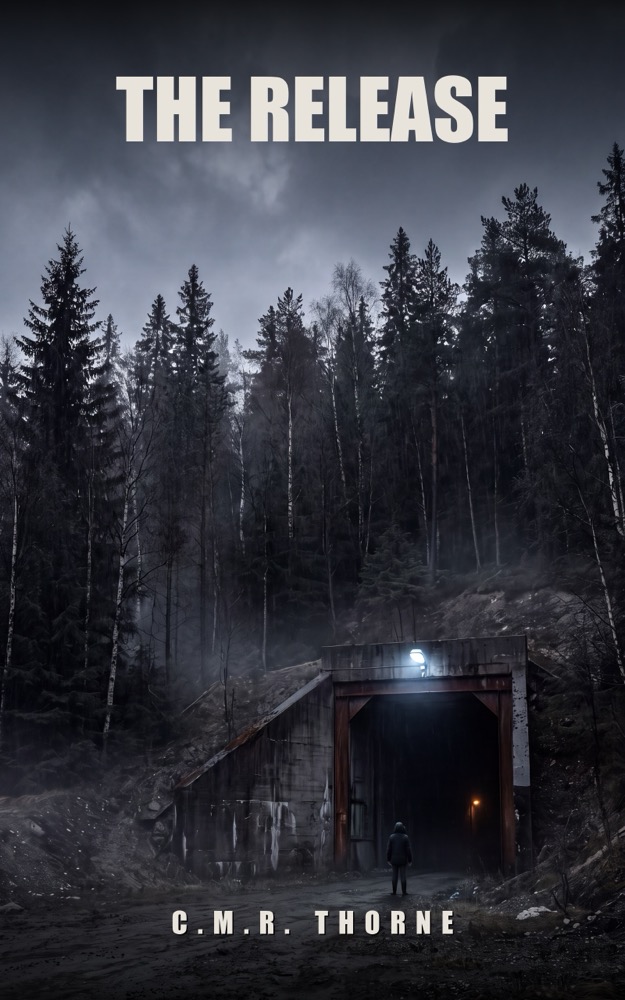
The Release
A Thriller
Five dead. A forged signature. And a case that stayed buried for eight years.
Where to buy
Five miners die when a gallery collapses. The official version: a natural disaster no one could have seen coming.
Then safety consultant Simon Kessler is shown the release document from that morning – with his own signature on it. Except he never signed it. And it was created after the collapse.
As Simon hunts down who forged his name, a case surfaces that he buried eight years ago. Everyone in the village had a reason to stay silent. So did he.
A psychological thriller about numbers that don't lie, people who do, and the price of a single signature. For readers of Harlan Coben and Tana French.
Product details
- Publisher
- Lowlands Press
- Language
- English
- Published
- 2026-08-15
- Pages (Paperback)
- 442
- Pages (Hardcover)
- 342
- Words
- 99.618
- ASIN (Ebook)
- B0HFD4S7DN
- ASIN (Paperback)
- B0HHSSMFYS
- ASIN (Hardcover)
- B0HHTW71WM
- ISBN (Hardcover)
- 979-8171951818
Read the opening
The opening of the book, the same pages a store lets you look inside. Read on at any of the stores above.
Prologue
September 12, 2019
The gallery smells of wet stone and new iron. The geologist counts her steps, out of habit, not because she has to. Sixty-eight meters from the station. Above her head hangs the mountain – four hundred meters of mountain, to be precise, and precise is the only thing she wants to be, down here, where everything you bring is a choice and everything you forget is a risk.
On her tablet is yesterday's release. Green check mark. Water pressure within bandwidth. Microseismics quiet. Entry approved for sampling, four hours maximum. At the bottom, the signature of someone she likes because he asks questions the way she asks them: first the number, then the opinion.
The numbers are green. She looked at them again this morning, up top, over coffee that tastes like the cup. Green, green, green.
And yet.
She crouches at the first measurement point and lays her hand against the rock, which serves no purpose whatsoever; no protocol asks for it. The wall is sweating. Walls do that here, that's normal, brine always finds a way. But this is more sweat than last week, and last week was more than the week before, and in her notebook – the real one, the paper one, with the pencil columns nobody reads – that little series has been climbing all summer while the reports keep saying nothing is wrong.
She brought it up only yesterday, up top. In passing, on her way out, the way you ask a question you hope is stupid. It's being looked at, they said. The sensors down there exaggerate, they said. Everyone says that here: the sensors exaggerate. As if the mountain has a flair for drama and the people don't.
She writes the value from the manual point in her notebook. Pencil, column, date. The number is too high. Not dangerously high, says the report in her head. Just too high, says the notebook in her hand.
Farther on, where the gallery narrows toward the trial section, something is ticking. She listens. Drips. Faster than yesterday? She isn't sure. That's the rotten thing about measuring: your body is a poor instrument and your heart is a worse one, which is why down here they trust the sensors – sensors that exaggerate, so they say – and the reports, where the numbers lie smooth and calm the way numbers never do in real life.
No real measurement is that pretty, she thinks. She almost said it out loud once, the day before yesterday, up top, at the coffee machine, to the only one up there who asks for raw data as if it were a right. I'll look into it, he said. Tomorrow she'll ask again. Out loud, and with the notebook on the table.
She straightens up, brushes the grit off her knees and walks into the trial section.
The lamp on her helmet doesn't remove the darkness; it only pushes it a few meters ahead, and the darkness waits patiently until she has passed and then closes again behind her back. She takes out her hammer and her sample bags. Sampling is honest work: the stone doesn't lie, the stone is what it is; you knock it loose and it tells you, right there in your hand, the truth of three hundred million years.
The first bag. The second.
At the third sample she hears it.
Not a tick. Not a drip. A sigh – as if the mountain, somewhere very deep, is changing position, a sleeper turning over. She stands dead still, the bag in her hand, and listens with everything she has, and the sound does not come back, and that is worse.
Only then does she look at the floor.
The water is around her ankles. It wasn't there a moment ago. There was no moment when it arrived; it is simply there, black and decided, and it pulls at her boots as if it's in a hurry, and somewhere behind the wall, where no human being has ever been, a sound is being born that she has never heard and recognizes instantly, because it is the one sound everyone down here spends their whole life expecting.
She runs.
Sixty-eight meters, she thinks. She counted them. She counts them again, the other way now, and the water counts along, faster, and the lamp on her helmet jumps across the walls and the walls move with it in a way stone is not supposed to move.
The numbers were green. Someone had looked at them. That's how it works, isn't it – that's what the reports are for, that's what the signatures are for, that's why there are names under documents: so you can run without having to wonder whether anyone told you the truth.
At meter forty the water is at her knees and the gallery starts doing the running for her.
At meter thirty she no longer thinks in meters.
She thinks of the notebook in her breast pocket, of the pencil columns that have been climbing all summer, and of how tomorrow – tomorrow – she would ask the question she should have asked today, and for one moment, between two blows of the water, she is not afraid but furious, a brief, white, perfectly lucid fury: the mountain said so. All summer long. Someone turned it into something else.
The light of her helmet touches the roof, once, like a finger pointing up.
She was not the first to understand too late that the numbers were lying.
And she would not be the last.
Chapter 1
Forty days after the collapse they slid the paper across the table, and Simon Kessler recognized his own signature the way you recognize a dead man in a crowd.
"Take all the time you need," said the woman from the Labor Inspectorate. Her name was Van Roon and she had the kind of patience you learn in rooms like this one. Next to her sat a detective named Boersma who had so far mostly breathed.
The interview room was in Assen, second floor, view of a parking deck. On the table stood two cups of water nobody had touched. Simon had his lawyer beside him, a man named Verweij who had given him exactly one piece of advice beforehand: answer the question, not the silence that comes after it.
He looked at the paper.
ENTRY RELEASE – V-0319-07Z. Norlith Resources, Zwartsloo operation, Section 7-Zuid. Date: March 19, 2027. Time: 07:40. Supplementary measurement taken on site at 07:30: water pressure within bandwidth, gas spectrum no anomalies, entry approved. And at the bottom, in the system's blue pixels: digitally signed – S. Kessler, external safety consultant.
"Do you recognize this document?" Van Roon asked.
"I recognize the format. It's a release from our own system."
"Our?"
"Norlith's system. I say 'our' out of habit. I worked for Norlith for ten years."
"And the signature?"
"That is my digital signature," Simon said. "And I have never seen this document."
Boersma moved for the first time. He leaned forward, as if the sentence had a smell. "You recognize your signature on a document you've never seen."
"Yes."
"Explain that to me."
"I can't explain it. Which is why I'm here, I assume."
Verweij shifted his pen a millimeter. That meant: easy.
Van Roon turned the paper a quarter-turn toward herself. "Mr. Kessler, I'm going to tell you what this document says, and then you're going to tell me what's wrong with it. It says that on March 19, at seven thirty in the morning, a supplementary measurement was taken at Section 7-Zuid. On site. It says the values were in order. It says that on that basis, entry was released. Three hours later Section 7-Zuid collapses and five men drown in mud. And underneath all of that is your name."
"Everything is wrong with it."
"Start anywhere."
"There was no supplementary measurement that morning at seven thirty. Not by me. On March 19 at seven thirty I was standing in my office in Zwolle, a hundred kilometers away. My contract with Norlith had been put on hold seventeen days earlier. I wouldn't even have been allowed onto the site."
"Then who took that measurement?"
"Nobody, I think."
"Nobody," Boersma repeated.
"I think that measurement never happened. I think someone wrote it down."
For a moment it was quiet. Down on the parking deck a car took three tries at a space that was too small.
"Who writes down a measurement that was never taken?"
"I don't know."
"Give it a try."
"No," Simon said. "I've spent twenty years learning not to guess on paper with human lives hanging from it. I'm not starting today. I can tell you what I know: that measurement is not mine, and I wasn't there."
"That's quite a claim," Van Roon said. "You're saying: this document is forged."
"I'm saying I didn't create it, and that the measurement in it was never taken. Which word you pick for that, I leave to you."
"The system shows the release was created under your authorization. Your account. Your certificate. You don't trace a signature like this one, Mr. Kessler. It's a digital identity. There's a certificate attached to it."
"I know. I helped set that system up."
"So you understand how this sounds."
"I understand exactly how it sounds." Simon heard his own voice: flat, articulate, the register he kept for delivering bad news to boards. "It sounds like a man who signed off on a safe mine and is now trying to talk his way out from under the rubble. I would think the same thing in your place. Until I looked at the data."
"What data?"
"The morning measurement from six thirty. The real one. Taken by the monitoring crew, it's in the system, and it was off. Elevated CO₂, anomalous water pressure. Request it."
Van Roon didn't leaf through her file. He noticed that. People who already know something don't leaf.
"A sensor fault was logged that morning," she said. "After a calibration review, the anomalous values were classified as a fault. It's all neatly in the file."
"Classified by whom?"
"That's not at issue here."
"It's the only thing at issue," Simon said. "Calling a measurement you don't like a fault – that's not an investigation, that's cleanup. In February I warned twice, in writing, about that exact section. Recommendation A-2701, February third. Shutdown of 7-Zuid and supplementary ground investigation. Tightened on February twenty-fourth. It's all in – "
He stopped.
"It was all in the system," Van Roon finished. Her voice wasn't unkind, and that chilled him more than hardness would have. "We have the system, Mr. Kessler. A complete forensic copy has been made. Your recommendations are not in it. No A-2701, no follow-up, nothing. In Norlith's entire active file there is no trace of an external consultant who ever warned about the Hollebroek fault."
"That's impossible."
"There is something else, though," Boersma said. "A consultant who loses his contract in early March. Who keeps his access. And six weeks later there's one document with his name on it, and that document declares the mine safe." He spread his hands, almost apologetically. "A geologist of paper, they call you. So explain to me what the paper says."
"I'm not a geologist. I'm a safety consultant."
"What's the difference?"
"The geologist tells you what the mountain is going to do. I tell you whether you're allowed to send people into it." Simon looked at the paper between them. "And I didn't tell anyone that here. This document says I was standing at that shaft at seven thirty with a meter in my hand, and that the mountain was fine. I've seen five death notices in the paper for men to whom, according to this piece of paper, I promised exactly that."
"So you deny it."
"I deny that I was there. I deny that measurement. I deny that release."
Van Roon nodded slowly, as if ticking off something she had expected. Then she laid a second sheet next to the first. A printout, grayer, more technical. System lines.
"This is the document's metadata," she said. "Created at: terminal group, Zwartsloo main complex. Authorization: S. Kessler. And here – " her finger, short-clipped nail, tapped a line, " – the location entry of the measurement itself. Measurement point 7Z-114, on site. You were there at 07:30."
Simon read the line. Read it again. Somewhere under his breastbone something very old began to hum very softly, a tone he hadn't heard in eight years and knew again at once.
"You were there at 07:30," Van Roon repeated.
"I have never been there," Simon said.